How to Present a Real Estate Project to Foreign Investors
What a buyer from the US or Europe asks for before reserving: a bilingual listing, floor plans, a written payment plan, the project's paperwork and a website that works from abroad.
October 20, 2026 · 4 min read
In this article
A foreign investor doesn't visit the site before getting interested: they find it on their phone, several flight hours away, and decide on that first screen whether it's worth writing. For a Dominican developer, that changes what needs to be ready before going to market. This is what we see working from the broker's side, and what we ask for before listing a project in our portfolio.
What a buyer from abroad asks first
The questions come in almost the same order every time:
- Where it is and what's around it: beach, airport, services.
- What it costs for the unit they want, in US dollars.
- How it's paid: how much at reservation, during construction and at delivery.
- When it's delivered, and what backs that date.
- Who is behind the project and what paperwork it has.
If the presentation answers those five things without a call, the leads that arrive are already qualified. If it doesn't, the buyer moves on to a project that does.
The listing: models, floor plans and starting price
Each unit type needs its own listing, not a mix:
- Interior and exterior area, separately and with a clear unit. Most US buyers think in square feet; show both.
- Floor plans for each model, readable on a phone.
- Starting price in US dollars, with the date of the availability list. A price without a date breeds doubt; a dated one reads as what it is: a snapshot.
- What's included: finishes, appliances, furniture, parking.
All of it in English and Spanish, written for each language rather than translated word for word. A badly translated listing tells the buyer nobody on the project will understand them later.
Photos and renders, clearly labelled
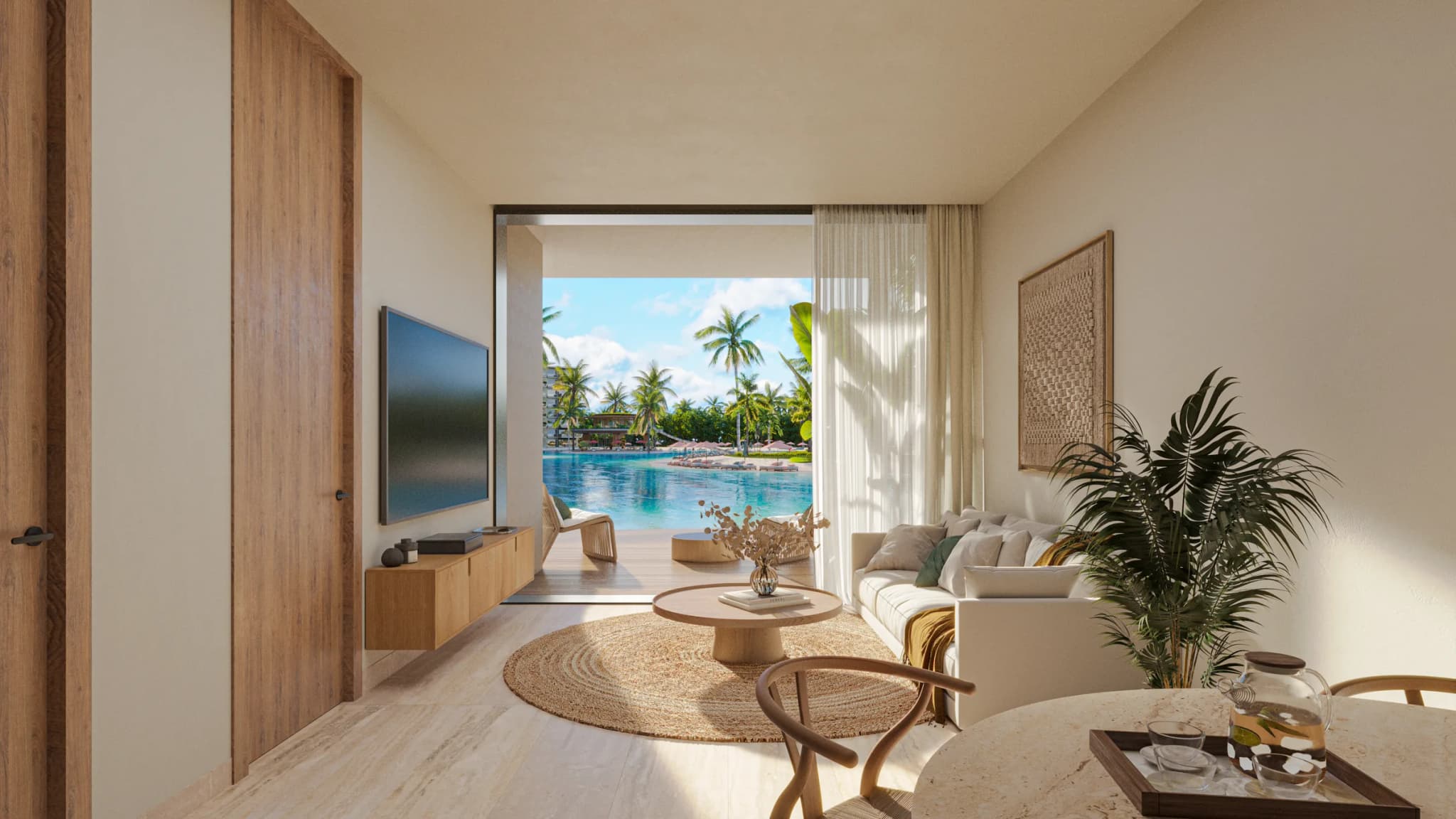
Renders are necessary in pre-construction, but they should be labelled as renders. As construction advances, real photos of the site or the structure are worth more than any polished image: they prove the project exists. A gallery that mixes both without saying so is the first thing a careful buyer questions.
The payment plan, in writing
In pre-construction the price isn't paid at once: there's a reservation, a payment at signing the promise of sale, instalments during construction and a balance at delivery. That split changes from project to project, and it's what the buyer most needs to see in writing:
- the percentage or amount of each stage;
- whether instalments follow dates or construction progress;
- in which currency and to which account;
- what happens if the buyer pays late or construction runs late.
Every listing in our portfolio has a calculator that splits the price according to the developer's plan. We can only show it with numbers when the plan reaches us confirmed in writing.
The project's paperwork
Foreign buyers come with their lawyer, and their lawyer will ask for the usual: construction licence, land title, who the developing company is and the template promise of sale. If the project holds CONFOTUR classification, the corresponding resolution. Having it in order before anyone asks saves weeks of negotiation and conveys what no photo can: that the project is above board.
A website that works from abroad
Buyers see the project on their phone, from the US or Canada, often on a connection that isn't the office one. The digital presentation has to match:
- Fast from outside the country. If the page is slow, the buyer goes back to the search results before the first photo loads.
- Genuinely bilingual, with its own address for each language, so Google shows the English version to people searching in English.
- Built for mobile: zoomable floor plans, contact buttons within reach, short forms.
- Measured: knowing which project and which page produce each lead, and whether it came from Google, an ad or a referral. Without that, there's no way to know where to put the marketing budget.
That's how we approached this site, which we built with The Agenzzy, a design and digital marketing team: listings in English and Spanish, fast loading from the US and tracking of which listing produces each lead. What was tested here works just as well for a project's own website.
What not to promise
Three things put off an informed buyer more than missing information:
- Returns or occupancy rates nobody can back in writing.
- Delivery dates without a construction schedule behind them.
- Hotel operators or brands that haven't signed yet.
At Mercanus we don't publish any of these even when a developer asks us to, and it's one of the reasons buyers trust what we do publish.
How we work with developers
We are an official broker in Cap Cana and talk to developers every day. When a project fits the investors we serve, we prepare its listing in both languages with the information the developer provides, publish it in the portfolio and support the buyer through closing via our real estate investment practice.
If you have a project on the east coast and want to present it to buyers from abroad, write to us and we'll tell you plainly what we'd need and whether it fits.
Frequently asked questions
What information does a foreign investor need to reserve a pre-construction unit?
Location, a US dollar price with the date of the list, floor plans and areas for each model, the payment plan in writing and the project's basic paperwork: construction licence, land title and template promise of sale.
Does the project need to be presented in English?
If the target is US or Canadian buyers, yes, and written for that reader rather than translated word for word. A dedicated English page also lets Google show it to people searching in English.
Should developers publish estimated returns?
No. A figure that can't be backed in writing costs credibility with an informed buyer and their lawyer. It's better to publish what can be verified: price, payment plan, paperwork and construction progress.
How does Mercanus list a project in its portfolio?
We check whether it fits the investors we serve, prepare the listing in English and Spanish with the information the developer provides and publish it with its date. Write to us from the contact page.
Keep reading

Want to talk about how this applies to you?
Tell us what you are looking for and we will reply within one business day. This is not a mailing list: someone on the team answers.
- 01Someone on the team reads it, not an automated system.
- 02We reply within one business day.
- 03If there is a fit, we set up a conversation with no obligation.
Not sure where to start? Tell us what you need →